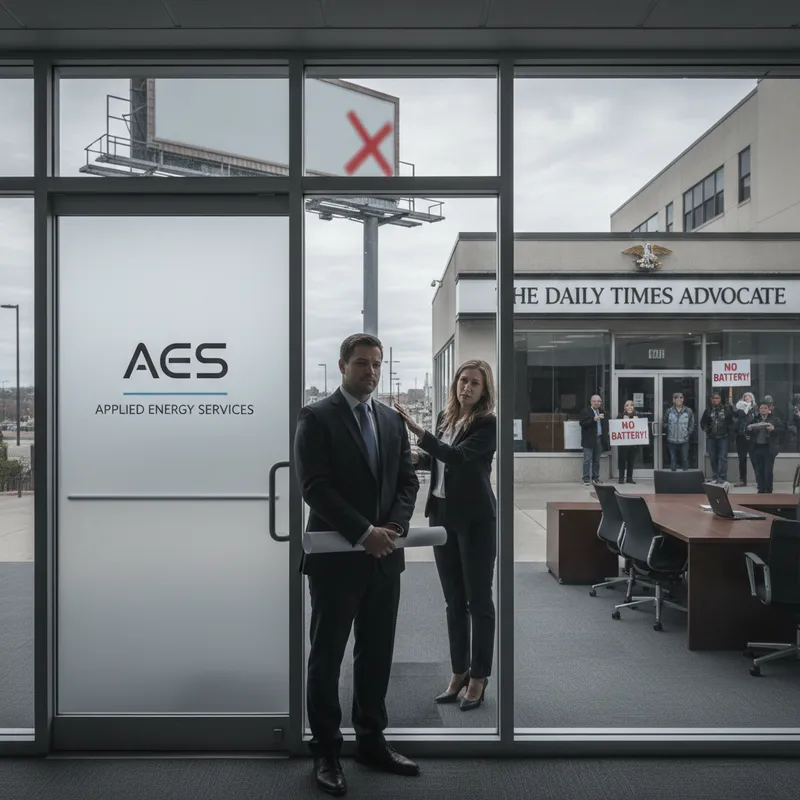
A controversial proposal for a massive lithium-ion battery storage facility in the Eden Valley community of Escondido has been withdrawn by the developer, Applied Energy Services (AES), ending a years-long battle with residents and community leaders.
The company announced the cancellation of the Seguro Battery Energy Storage System (BESS) project on its website, citing the need to "prioritize other projects amid challenging market conditions." The decision was met with celebration and relief from residents who had vehemently opposed the project since it was first introduced in 2023, primarily due to fears of catastrophic chemical fires in their semi-rural, fire-prone neighbourhood.
The project would have seen the construction of one of the largest BESS facilities on a 23-acre property in Eden Valley. It was intended to store renewable energy and provide it to San Diego’s power grid, a key component of California's strategy to transition to cleaner energy sources. However, the use of lithium-ion batteries in numerous large metal containers so close to homes sparked immediate and sustained backlash.
Community celebrates hard-fought victory
For the dozens of residents in the Elfin Forest and Harmony Grove communities, the news marks the end of a stressful period of activism and uncertainty. Many, like Laderman, lived just metres from the proposed site.
Elated and very relieved,” said resident Phyllis Laderman. “It could not be better. It’s been years that we had to live with that threat…we can breathe.
“I have a horse in the backyard. His barn, his stall, would have been probably about 50 feet from the nearest battery so if there’d been any fire, his whole stable would have gone up,” Laderman says. The potential for a chemical fire, which is notoriously difficult to extinguish and can release toxic fumes, was the central fear for many in the area, which is characterized by open spaces and susceptibility to wildfires.
The community organized quickly, forming opposition groups, attending meetings, and hiring experts to scrutinize the developer's plans. The Elfin Forest Harmony Grove Town Council played a crucial role in coordinating the opposition. The pressure was so significant that some residents reportedly moved away because of the project's looming possibility.
“They were concerned that their quality of life was going to be ruined and put at risk,” said JP Theberge of the town council. Those who stayed gathered to celebrate their victory, feeling their persistence had paid off. “It just shows you what you can do…The old American way,” Laderman added.

Technical risks and key setbacks
The opposition was not just based on general fear, but on specific technical analysis. Joe Rowley, an engineer who formerly oversaw similar development projects for a large energy company, provided technical expertise for the community, meeting with the City of Escondido, fire officials, and Palomar Health to outline the potential risks.
“Battery storage projects contain large quantities of toxic flammable material and that’s something you have to take into account when you’re looking at the adjacent land uses,” Rowley said. He highlighted that while such facilities are necessary for a modern grid, their location is paramount. Placing them near residential zones and critical infrastructure like hospitals requires a much higher level of scrutiny.
A significant blow to the project came when Palomar Hospital rejected a request from AES to build an easement through its property. The easement was critical for the project to connect to a nearby SDG&E substation. This setback, combined with the unyielding community pressure, likely contributed to the "challenging market conditions" AES cited in its withdrawal statement. As California pushes towards a carbon-neutral grid by 2045, the demand for battery energy storage systems is surging. These facilities absorb surplus solar and wind power during the day and feed it back into the grid when demand is high or generation is low. According to the California Energy Commission, the state has rapidly increased its battery storage capacity, recognizing it as essential for grid stability and preventing blackouts. However, the Escondido case underscores the growing challenge of finding suitable locations for this critical infrastructure, balancing energy needs with public safety, as similar concerns about power, water, and housing impacts have been raised by councils in Sydney.
Developer cites market conditions
In its official statement, AES framed the withdrawal as a business decision. The company stated it remains "committed to advancing projects that can provide the safe, reliable, and affordable power needed to strengthen the region's electric grid."
The statement read: "While AES is no longer moving forward with the proposed Seguro project as we prioritize other projects amid challenging market conditions, we remain committed to advancing projects that can provide the safe, reliable, and affordable power needed to strengthen the region's electric grid and generate meaningful economic benefits locally. We thank our local and regional stakeholders who have supported this project and look forward to continued opportunities to partner to drive San Diego County and California's energy leadership.”
Despite the developer pulling out, the fight over the Seguro project serves as a case study for other communities across San Diego County and the state facing similar proposals. It highlights the power of organized local opposition in influencing and even halting major development projects. As the need for renewable energy infrastructure grows, the conversation around where to build these facilities and how to ensure their safety will only become more critical.
The community, meanwhile, is looking forward to continued peace and quiet. The outcome, for them, reaffirms a belief in the power of collective action against what they saw as an existential threat to their homes and way of life.