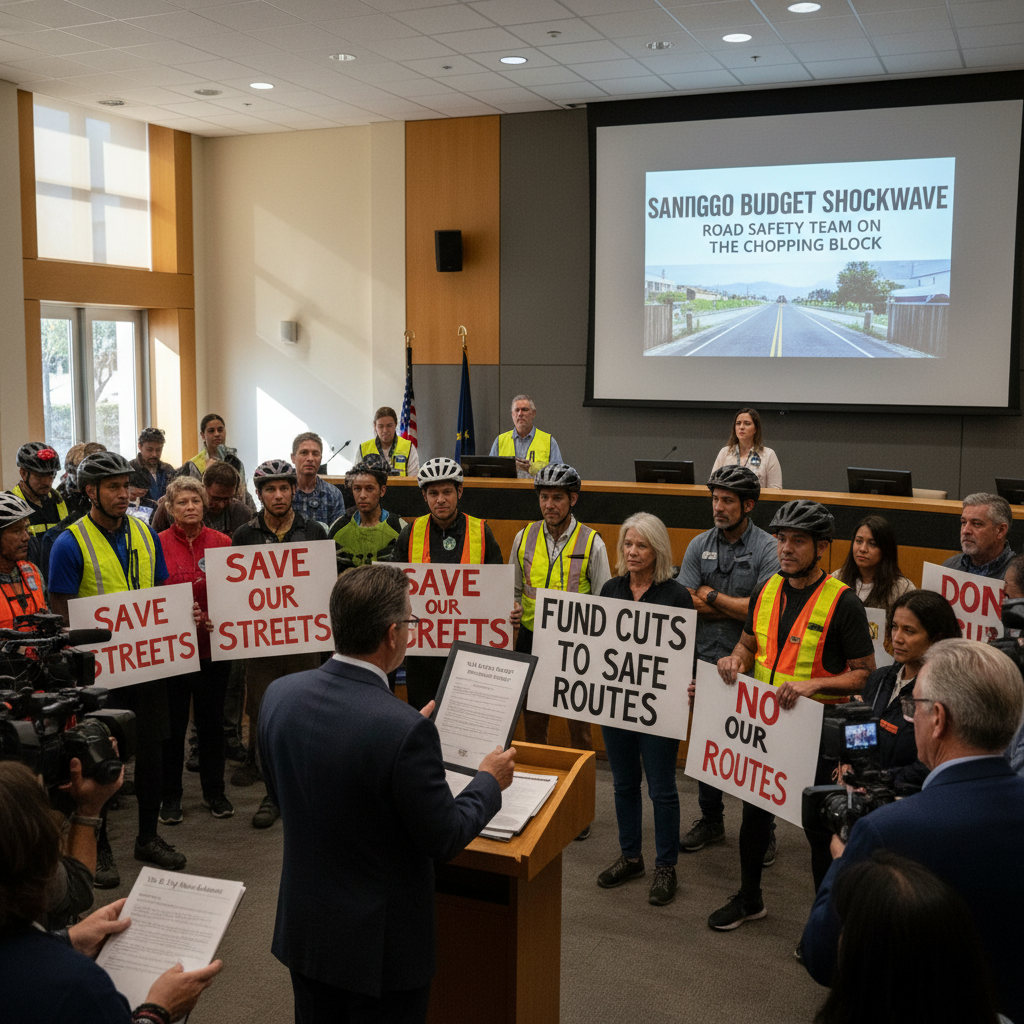
The City of San Diego's draft budget for fiscal year 2027 includes the complete elimination of the transportation department's multimodal team, a group of specialized traffic engineers responsible for designing safer streets for pedestrians, cyclists, and drivers. The move is part of a series of sweeping cuts proposed by Mayor Todd Gloria to address a significant budget deficit.
According to the budget proposal, funding would also be scaled back for a number of bike lane and traffic safety projects that are already underway, leading to significant delays or outright cancellations. These initiatives are central to the city’s long-term goals of creating more "complete streets" that serve all users, not just vehicles.
The proposed cuts come as the city grapples with ongoing financial challenges. This year's budget was formulated to close a projected deficit of roughly $118 million. The elimination of the transportation safety team represents a significant shift in the city's approach to urban planning and street design, prioritizing fiscal consolidation over the expansion of active transportation infrastructure. Similar issues have surfaced in Auckland, where the Wellesley Street transport overhaul is a major step in city transport upgrades.
Advocates raise alarm over safety implications
The announcement has been met with immediate concern from safe-streets advocacy groups, who argue the cuts are dangerously short-sighted. Critics of the proposal point to a steady increase in traffic-related fatalities in San Diego, even as the city has an official Vision Zero policy, which aims to eliminate all traffic deaths and severe injuries.
Advocates say that removing the very team tasked with implementing safety designs fundamentally undermines the city's commitment to this goal. They argue that investing in pedestrian and cycling infrastructure is a proven method for reducing collisions and saving lives. The team slated for elimination is responsible for planning and designing features like protected bike lanes, pedestrian refuge islands, and other traffic calming measures that make roads safer.
Local advocacy group Respect Bird Rock highlighted that the budget also leaves the Citywide Speed Management Plan entirely unfunded. This plan, which would systematically lower speed limits on streets across San Diego, is seen by supporters as a critical tool for improving public safety. Without dedicated funding, the plan remains inert.
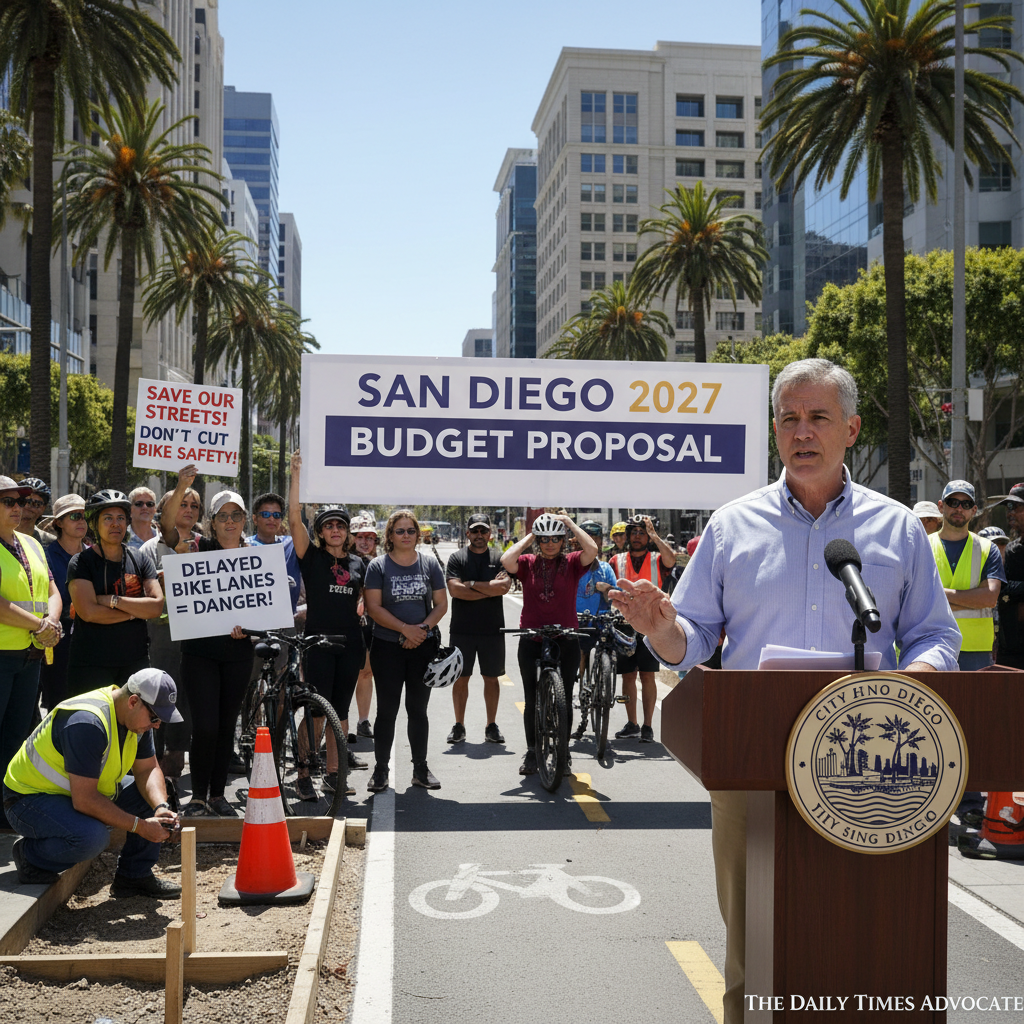
A pattern of difficult budget choices
The proposed cuts are not occurring in a vacuum, but rather against a backdrop of persistent fiscal pressure. The city has faced significant budget shortfalls in recent years, forcing difficult choices between competing priorities. During the previous budget cycle for fiscal year 2026, the city had to navigate a deficit that grew to $350 million by the time negotiations concluded.
Those tense negotiations between Mayor Gloria and the City Council resulted in cuts to various public services, most notably the reduction of Sunday hours at all public library branches. While the council managed to restore proposed cuts to recreation centre hours and some Monday library services, the final budget reflected a strained fiscal reality. This echoes the severe cuts made in 2020 under former Mayor Kevin Faulconer, when a $250 million shortfall caused by the COVID-19 pandemic led to the elimination of hundreds of city jobs and deep cuts to arts and culture funding.
The current proposal to cut the transportation team is another example of essential services being put on the chopping block as the city struggles to balance its books. The continuous cycle of budget deficits has created an environment where long-term investment in infrastructure and safety initiatives becomes secondary to immediate fiscal solvency.
Funding for ‘Fatal 15’ hot spots remains
Despite the deep cuts to the multimodal program, Mayor Gloria's budget does preserve funding for one key safety initiative: addressing the "Fatal 15." These are the 15 corridors and intersections in San Diego with the highest rates of fatal and serious injury crashes. This program has been a cornerstone of the city's Vision Zero strategy for several years.
Targeting these specific locations allows the city to concentrate its limited resources on areas of demonstrated high risk. The work involves implementing targeted engineering fixes, such as upgrading traffic signals for better visibility and timing, making pedestrian crossings safer and more accessible, and installing other traffic calming measures designed to reduce vehicle speeds and conflict points.
While advocates welcome the continued focus on these dangerous hot spots, they caution that a reactive, site-specific approach is not a substitute for a proactive, systemic program that designs safety into the entire street network from the outset. The elimination of the multimodal team, they argue, removes the city's capacity for that kind of proactive work.
The draft budget will now go before the City Council for a period of review and debate. Advocacy groups have signalled their intention to lobby council members heavily to restore funding for the multimodal team and other active transportation projects, setting the stage for a contentious budget season.