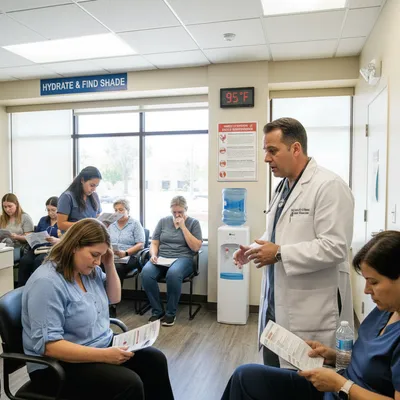
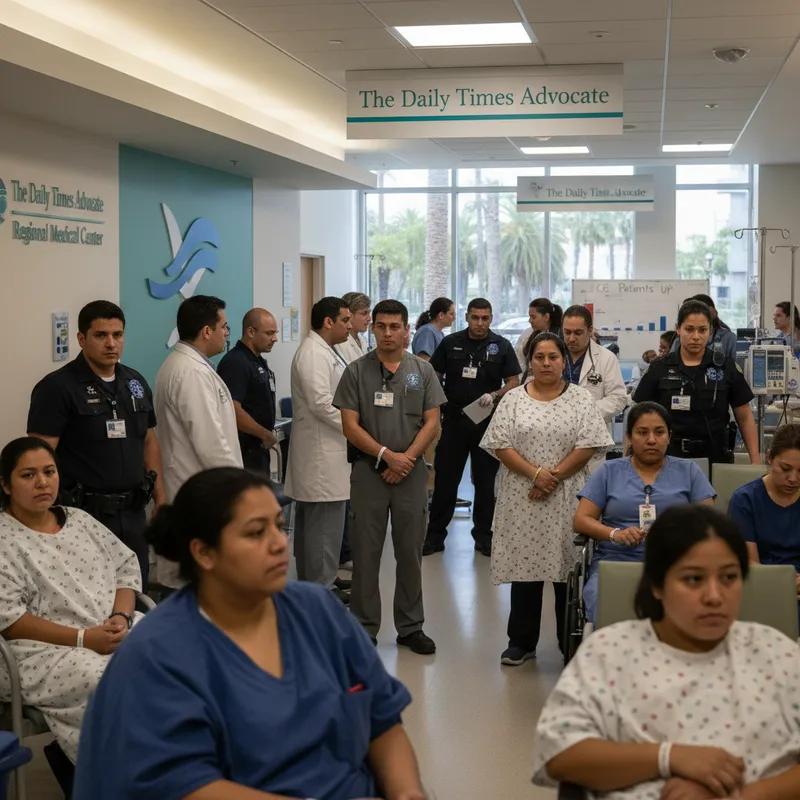
Local hospitals are treating a significantly higher number of U.S. Immigration and Customs Enforcement (ICE) detainees, according to an analysis of federal data. In San Diego County, at least 59 ICE detainees were hospitalized between January and mid-October of 2025, a steep increase from the 29 individuals treated during all of 2024.
The local trend mirrors a nationwide pattern that saw hospitalizations of ICE detainees climb from approximately 1,300 in 2024 to 1,900 in the first ten months of 2025. The data was obtained by the Deportation Data Project through a public records request. However, ICE has reportedly stopped releasing detailed data on hospital detentions since October 2025, limiting further analysis.
Hospital officials clarify that in most instances, an ICE hospital detention involves a person already in federal custody being transported to a hospital for medical attention. In a smaller number of cases, an individual in local law enforcement custody may be transferred to ICE custody while already receiving hospital care. The increase in hospital visits corresponds with a massive surge in ICE arrests under the Trump administration, which rose by over 1,300 per cent in the San Diego region in 2025 compared to 2024.
A local look at the numbers
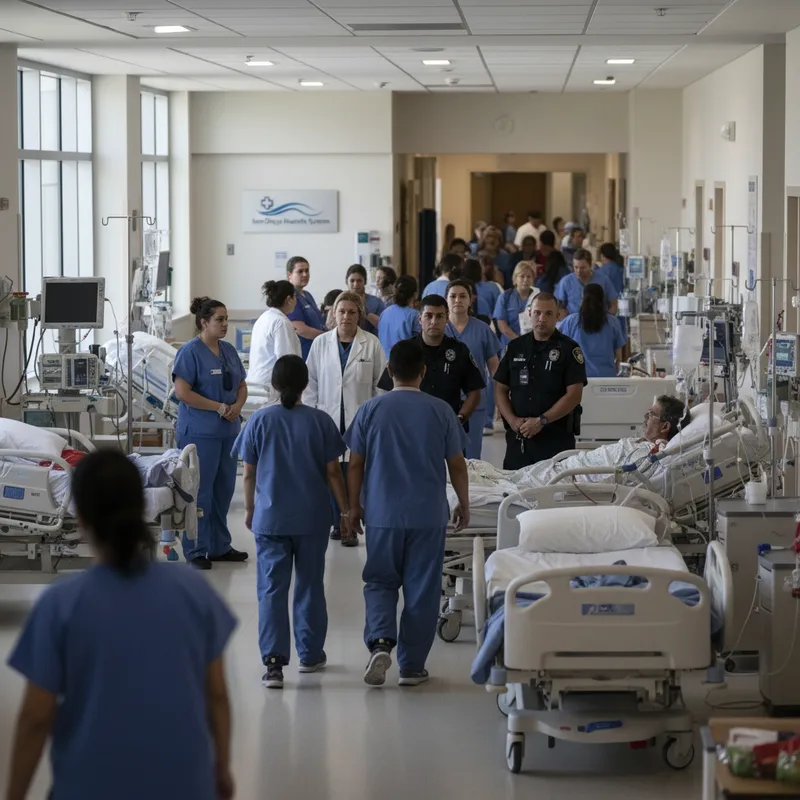
Paradise Valley Hospital in National City treated the highest number of ICE detainees in the county, with 34 patients from January to October 2025. Following Paradise Valley was Sharp Chula Vista Medical Center with 11 detainees, the Alvarado Parkway Institute in La Mesa with 10, and UC San Diego Medical Center with four. These figures highlight the growing role local healthcare facilities are playing in the federal immigration detention system.
A spokesperson for the Department of Homeland Security emphasized that the agency’s presence at medical facilities is not for enforcement purposes. “ICE does not conduct enforcement at hospitals. period,” the spokesperson stated in an email. “We would only go into a hospital if there were an active danger to public safety.” They added, “Of course, if we have a detainee we need to take to the hospital for medical care, we have officers accompany them for their monitoring, safety of the staff, and the public. This is standard procedure for all law enforcement agencies.”
In response to the increased presence of federal agents, many San Diego hospitals have reinforced policies to protect patient privacy and limit access. Sharp HealthCare released a written statement confirming its compliance with privacy laws. “We comply with all applicable patient privacy laws, including Senate Bill 81, which prohibits health care facilities from granting immigration enforcement access to patients or nonpublic areas without a valid judicial warrant or court order and requires patient immigration status to be treated as protected information,” the statement read.
Paradise Valley Hospital echoed this stance, stating it does “not allow ICE on our property without a judicial warrant.” Ben Macapugay, a media representative for the hospital, noted that while ICE agents must accompany detainees, they are required to “remain with their patients and are not allowed to walk around our hospital facility.”
Concerns over detention centre conditions
Given San Diego’s location, local hospitals have a long history of treating federal immigration detainees, often transported by U.S. Customs and Border Patrol. This became particularly prominent after the height of the border wall was increased in 2019, leading to a spike in traumatic injuries from falls. While changes in border policy under the current Trump administration have seen a decrease in fall-related injuries, a new set of concerns has emerged.
Activists and human rights advocates now worry that the rise in hospitalizations is linked to deteriorating conditions within immigration detention centres. Detainees have lodged complaints about issues such as poor-quality food and a lack of adequate medical attention. Several facilities, including the Otay Mesa Detention Center, have reportedly exceeded their contractual capacity. Last year, 33 people died while in ICE custody, according to the federal agency’s own reporting.
Conditions are so deplorable and don’t have adequate resources to help people that are in need of medical attention, and so we’ve seen people be transported (to hospitals) to get them access to health care. The situation at the Otay Mesa Detention Center, run by the private prison operator CoreCivic, has drawn particular scrutiny. Last month, San Diego County sued federal agencies and CoreCivic to compel a full health inspection after officials were allegedly denied access. A recent oversight visit by San Diego congressional representatives Sara Jacobs and Mike Levin revealed the facility’s clinic has just 13 healthcare staff, including two doctors, for a population that has at times exceeded 1,500. Separately, in a different regional crisis, Sydney's landfill crisis sparks regional incinerator backlash.
In response, CoreCivic spokesperson Brian Todd said the company’s top priority is the health and well-being of detainees. “We take seriously our responsibility to adhere to all applicable federal detention standards in our ICE-contracted facilities, including (Otay Mesa Detention Center),” Todd said. He stated that the facility was recently reaccredited by the National Commission on Correctional Health Care and that all detainees have daily access to medical care sign-ups.
Hospitals reaffirm patient privacy
The Trump administration’s aggressive immigration enforcement strategies prompted local health systems to issue proactive guidance to staff in early 2025. UC San Diego Health, which cared for four ICE detainees in 2025, confirmed its policies have not changed. A policy memo directs staff to have the risk management department handle all interactions with federal agents and to “neither confirm nor deny the presence of a patient to an agent.”
“UC San Diego Health, like other hospitals in our binational region, has long-standing relationships with a variety of law enforcement groups, including Border Patrol, as the agency transports immigrant patients in need of immediate medical and surgical care to area hospitals,” the university stated. “We value our partnership and medical teams who strive to ensure that anyone who receives care in our facilities does so in a safe and respectful environment.”
Alvarado Parkway Institute, a private mental health provider, also stressed its commitment to patient privacy. Patrick Ziemer, the institute’s CEO, confirmed they do not allow law enforcement to enter facilities without a warrant signed by a judge. “While there is so much happening in the world, our team is keeping our focus on our patients,” Ziemer said in an email.