
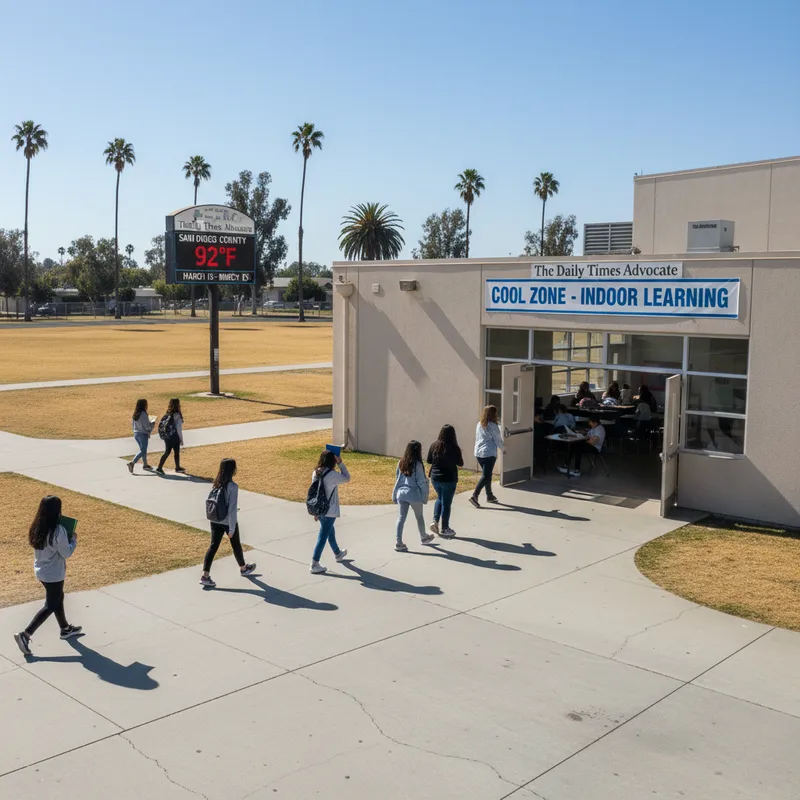
San Diego County schools are moving students indoors as mid-March heat pushes toward record temperatures. Four major districts say they have safety protocols ready.
Chula Vista Elementary, San Diego Unified, San Marcos Unified and Cajon Valley have all confirmed they activate heat-response procedures during advisories. The steps are similar across campuses, but principals can adjust plans to match local conditions.
The unusual timing of the heat has put a spotlight on how schools handle outdoor time, from recess supervision to athletics and dismissal lines. District officials say hydration and shade are the first priorities.
Which san diego county school districts activated heat plans
Chula Vista Elementary School District serves 50 school sites and sends out protocols each time a heat advisory is issued, said district representative Giovanna Castro. The guidance goes to school leaders who decide how to manage outdoor time and campus access to cooled spaces.
San Diego Unified and San Marcos Unified say they use similar steps, including moving students inside when temperatures rise. Cajon Valley Union School District, which spans communities from La Mesa to Alpine, also relies on site-by-site decisions because conditions can differ across its geography.
Families have tracked the forecast closely because the heat arrives before many students have adjusted to warmer routines. The Daily Times Advocate has also reported on unseasonable heat and the health risks that can follow when the body is not acclimatized.
District leaders said they watch for the hottest part of the day, when playground surfaces, blacktop and portable classrooms can warm quickly. They also said they prepare for a surge in requests to use indoor multipurpose rooms and libraries.
What changes schools make during the hottest hours
Chula Vista Elementary limits outdoor activities during the hottest hours. Recess and lunch may move to shaded areas or indoors, and the district says all campuses have air conditioning.
“At the Chula Vista Elementary School District, whenever there is a heat advisory, we always send out protocols to our 50 school sites,” Castro said.
Castro said the district recommends shifting activities into air conditioned spaces when possible and keeping water available throughout the day. “We are recommending that outdoor activities take place indoors, in the AC when possible, and for all students to stay hydrated,” Castro said.
On many campuses, the biggest scheduling pressure comes between late morning and early afternoon. That is when physical education, lunchtime play, and after-lunch recess can overlap with peak heat.
San Marcos Unified said it watches for those mid-day temperature spikes and expects administrators to react in real time. “Right around that 11 o'clock hour, it's starting to get warm outside. So if administrators are seeing that, they're going to bring those kids inside for indoor activities,” said Mareese Evans with San Marcos Unified.
Districts said these adjustments can include shortening outdoor rotations, moving classes to interior rooms, and shifting field activities to earlier times. Staff also increase reminders about water bottle refills, especially for younger students who may not notice early signs of overheating.
Heat plans can also affect dismissal. When lines form for pickup, schools may open shaded gates, move waiting areas, or bring students into cooler spaces until cars arrive.
How principals decide when to cancel outdoor activities
Cajon Valley leaders told families that principals can implement “rainy day schedules” to keep students inside during extreme weather. The approach recognizes that campuses from La Mesa to Alpine can experience different temperatures and sun exposure.
San Diego Unified and San Marcos Unified say they also build flexibility into their plans. That flexibility matters on schools with limited tree cover, heavy use of portable classrooms, or older HVAC systems that cannot cool large groups quickly.
San Marcos Unified’s risk management team tracks National Weather Service guidance that outlines thresholds for caution, extreme caution, danger and extreme danger. Evans said those categories guide school decisions about outdoor time.
“If it reached the danger zone, everybody has to come inside, and various activities are canceled. Are we at the danger zone yet? We are not,” Evans said.
Schools also rely on staff observations, including the feel of playground equipment and the behaviour of students during running games. Districts said they treat dizziness, headaches and nausea as signals to stop outdoor activity and move students into a cooler room.
Parents have been asked to help by sending students with refillable water bottles and clothing suited for warmer days. District officials said those small steps can reduce office visits and nurse referrals when the heat rises.
What california’s new school heat law requires by july 1
This heat event arrives as California moves toward a new statewide requirement for heat policies at schools. Under Senate Bill 1248, all public and charter schools must adopt enforceable extreme-weather safety policies for outdoor activities by July 1.
Athletic programs have long faced heat rules, but the new law creates a broader standard that covers the school day. Districts already operating protocols say the change will require clear, written procedures that apply consistently across sites.
Schools will likely need to spell out who makes decisions, what triggers schedule changes, and how families are notified. Policies may also address access to shade, water and cooling for students with health needs.
For families looking for official guidance on heat illness symptoms and first aid, the U.S. Centers for Disease Control and Prevention provides a public overview of heat-related illness. Districts said they use similar symptom checklists when training staff.
The mid-March heat has also sparked practical questions about campus infrastructure. Older schools with limited tree canopy can face higher surface temperatures, and multipurpose rooms can fill quickly when several grades shift indoors at once.
Planning for extreme weather can overlap with other school priorities, including outdoor learning and athletics. As communities debate facility upgrades and schedules for extracurriculars, San Diego has also been focused on big-ticket sports decisions, including the Petco Park lease talks.
Districts said they will continue monitoring forecasts this week and will adjust campus plans as conditions change. San Marcos Unified and other districts have indicated they will rely on the National Weather Service categories when deciding if conditions move into the danger zone.
California’s deadline for enforceable extreme-weather safety policies for public and charter schools is July 1.