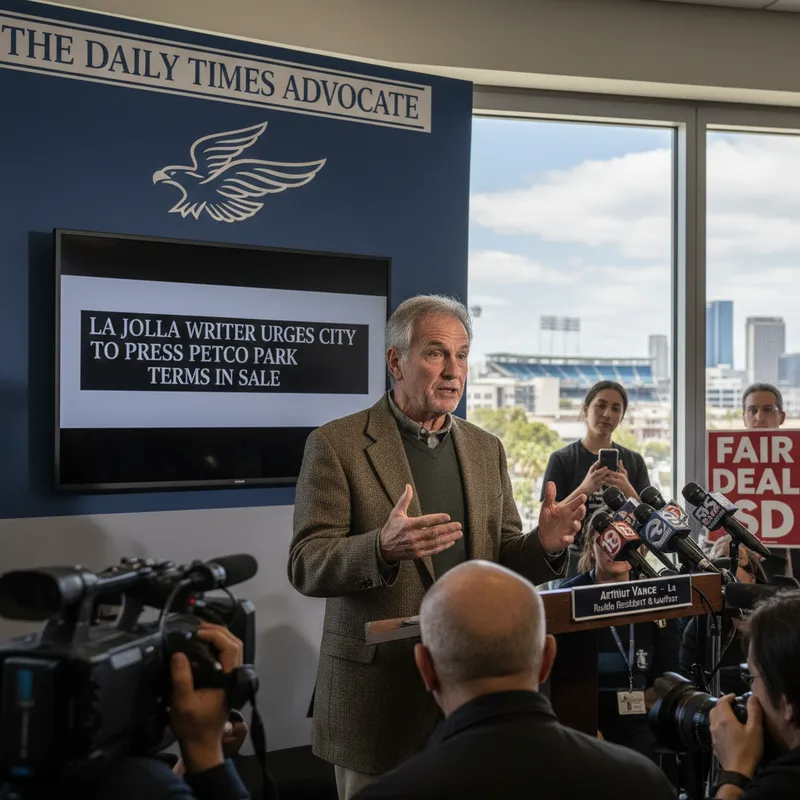
San Diego should not stay quiet if the Padres change hands, a La Jolla resident argues. He says the Petco Park deal gives City Hall leverage, if it uses it.
In a letter published March 20, Thomas W. Schoene urged city leaders to spell out what they would want in any future contract extension tied to Petco Park. He suggested the city aim to increase revenue, including by raising rent.
What does the city’s petco park deal allow, and restrict?
Schoene says the city “cannot interfere with a new ownership deal per its contract,” but argues that does not require a “hands-off” approach. His argument lands as public attention returns to the relationship between a possible sale and the ballpark agreement.
The city’s role matters because Petco Park is a city-owned asset, and the Padres operate there under a long-term arrangement. While the letter does not cite specific clauses, it frames the contract as both a constraint on direct involvement and a source of bargaining power for future terms.
The issue has already drawn interest from residents trying to understand what, if anything, a new ownership group would inherit and what the city could renegotiate. Readers looking for background can also see our earlier coverage, Petco Park lease, on how the pact could shape ownership talks.
How much rent could the city ask for at petco park?
Schoene argues the city should “indicate now what it is looking for in a future contract extension,” with the goal of boosting city revenues. He offered a blunt example, “tripling the rent.”
That kind of number would not just affect city finances. Schoene says prospective owners would factor it into what they are willing to pay for the team.
“Prospective owners would look at such terms and, if they thought their profits would be reduced, they would reduce their bids for the Padres accordingly,” Schoene said. “That is, whatever the city gains, the Seidlers would pay for through reduced sale profits.”
His point centres on the idea that money does not appear from nowhere in a franchise sale. A buyer who anticipates higher payments to the city may offset that cost by offering less for the club.
Schoene also raises an equity argument between the city and the current ownership family. “The Seidlers can afford it, but the city cannot,” he said.
He does not provide a rent figure the city currently receives, or a calculation for what tripling rent would mean in annual revenue. Still, the letter sketches a framework city leaders often face in sports venue negotiations, balancing near-term fiscal gains against the risk of weakening economic activity tied to the team and stadium.
Could a side agreement lock in terms before a sale?
Schoene identifies a practical problem with his own proposal. Even if city officials state their expectations now, he says future negotiations may not honour them unless the terms become enforceable.
“The difficulty would be locking in the city’s benefits now, because in a future contract extension, new owners would likely ignore anything not legally binding,” Schoene said.
He then floats a possible workaround, asking whether the city could reach a separate deal with a new owner that signals future direction. “Could a side agreement with the new owner about potential new terms do it,” he asked, “for example, only doubling the rent?”
That idea points to a common tension in public-private contracts. Cities often want certainty before leadership changes, while private owners want flexibility if revenues, taxes, or competitive pressures shift.
The difficulty would be locking in the city’s benefits now, because in a future contract extension, new owners would likely ignore anything not legally binding.
Why petco park revenue questions matter for san diego budgets
When cities negotiate major venue contracts, the questions extend beyond baseball. The terms can influence infrastructure costs, downtown policing plans, and the revenue streams that help fund basic services.
Those debates also play out as San Diego weighs other long-term commitments. Residents following city policy decisions can compare how officials approach different revenue and contract issues, including the way the city handles large entertainment assets such as the ballpark.
For readers tracking local governance, a sale would arrive amid a busy civic calendar. Many downtown gatherings and major events also place pressure on public resources, as listed in San Diego events March 19-25.
To understand the broader context of how cities structure and disclose stadium-related arrangements, readers can consult public guidance from the U.S. Government Accountability Office on state and local fiscal practices and transparency. The report provides background on how public entities evaluate long-term obligations, including those tied to major facilities.
What happens next if the padres are sold?
Schoene’s letter does not claim a sale is imminent, nor does it identify potential buyers. It focuses on timing, and on the city deciding, publicly and early, what it would seek if negotiations reopen down the road.
Any eventual change in ownership would trigger renewed scrutiny of the city’s ability to protect its interests, from rent to other revenue-sharing provisions. Schoene’s argument suggests those questions should not wait until after a buyer is chosen.
In the meantime, the Padres continue to operate under existing arrangements. If city officials take up Schoene’s suggestion, the next visible step would be a public discussion by council or a committee, where negotiators could outline goals before any contract extension talks begin.
Schoene’s letter was published March 20, and his proposed starting point was simple: “Perhaps the city should indicate now what it is looking for in a future contract extension.”