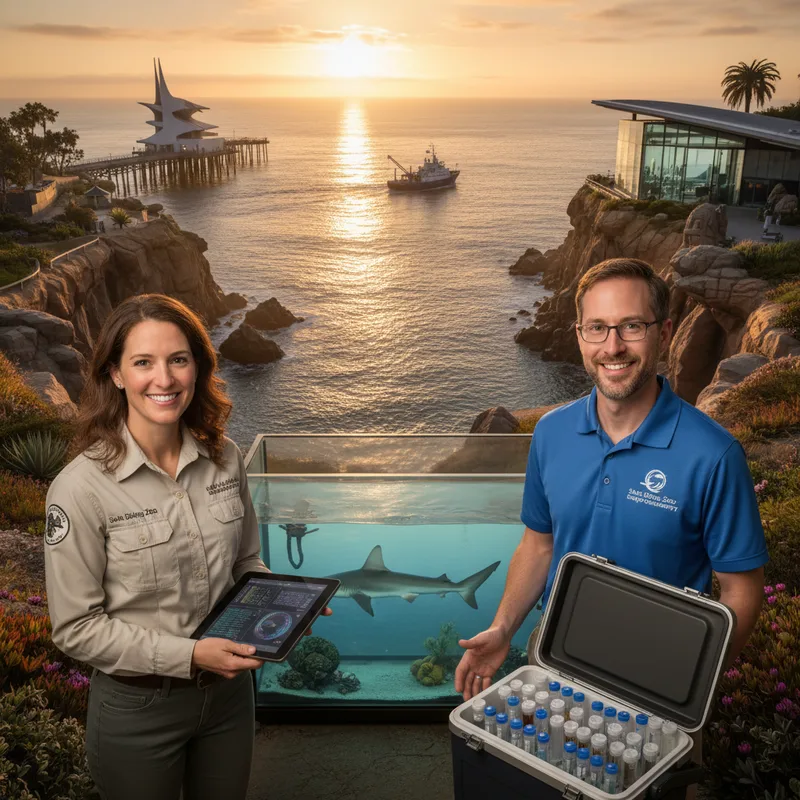
Two of San Diego’s leading scientific institutions have announced a formal partnership to protect the world’s oceans, combining more than two centuries of research experience to preserve marine life. The San Diego Zoo Wildlife Alliance (SDZWA) and UC San Diego’s Scripps Institution of Oceanography will focus on biobanking, conservation technology, and student engagement to address the mounting threats to marine species and habitats.
The collaboration, announced Tuesday, leverages the unique strengths of each organization. The SDZWA brings its world-renowned expertise in veterinary medicine and the cryopreservation of genetic material from its 50-year-old Frozen Zoo. Scripps contributes its vast knowledge of ocean science and one of the world’s largest collections of preserved marine specimens, a vital library of marine biodiversity.
This union aims to create new solutions for some of the most challenging conservation issues, from restoring endangered species to predicting the impacts of climate change on delicate ocean ecosystems. By combining the Zoo’s advanced biobanking infrastructure with Scripps’ extensive marine collections, the partners hope to accelerate their efforts to safeguard marine biodiversity for future generations.
A legacy of science and conservation
The collaboration is a natural step for two institutions deeply woven into the fabric of San Diego. The San Diego Zoo Wildlife Alliance dates back to 1916, founded by Dr. Harry Wegeforth in the aftermath of the Panama-California Exposition. From its humble beginnings as a line of animal cages along Park Boulevard, it has grown into a global leader in conservation science. A pivotal moment in its history was the creation of the Center for Reproduction of Endangered Species in 1975, which laid the groundwork for the modern Frozen Zoo.
Similarly, the Scripps Institution of Oceanography owes its existence to the vision of a pioneering figure, Ellen Browning Scripps. A journalist, businesswoman, and philanthropist, Ms. Scripps was a key supporter of scientific and educational endeavours in the early 20th century. Her financial backing was instrumental in establishing the oceanography institute that bears her name, as well as several other major San Diego landmarks. Her belief in the power of independent thought and courageous inquiry continues to guide the institution today.
The two organizations have successfully collaborated in the past. In a recent scientific first, researchers from both institutions worked together to produce dozens of larvae from the critically endangered sunflower sea star, using frozen sperm from the SDZWA’s collection. This success demonstrated a viable path for restoring a species devastated by sea star wasting disease along the Pacific coast.
The promise of biobanking
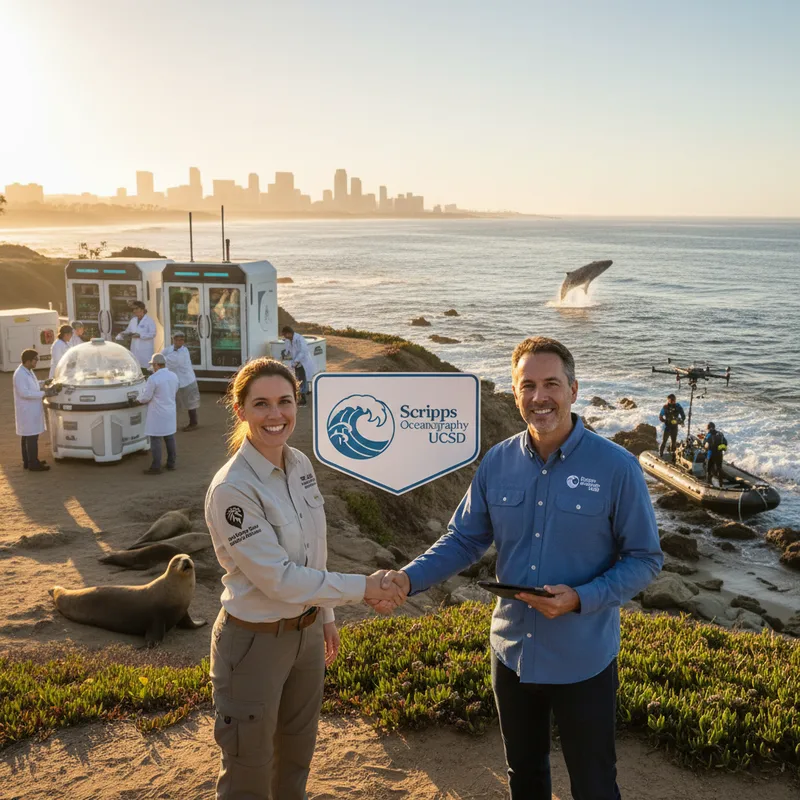
A central pillar of the new partnership is biobanking, the process of preserving living genetic material like cells and tissue. The SDZWA’s Frozen Zoo is the largest and most diverse collection of its kind, containing viable cell cultures from more than 1,220 species. This genetic library offers a powerful tool against extinction.
The potential of this approach was famously demonstrated with the Przewalski’s horse. Cells from a male horse, stored in the Frozen Zoo in the 1980s, were used more than 40 years later to clone a foal named Kurt. A second foal was cloned in 2023, reintroducing vital genetic diversity into a species that was once extinct in the wild. This breakthrough, made possible by long-term vision and investment in biobanking, offers hope for many other species on the brink.
The partnership will now extend this expertise to the marine realm. Scripps maintains an immense collection of preserved specimens, including millions of marine vertebrates, zooplankton, clams, worms, and crustaceans. However, these collections do not contain living cells. The new agreement will allow Scripps to utilize the Frozen Zoo’s sophisticated infrastructure to develop techniques for biobanking marine organisms, starting with threatened kelp species native to San Diego’s coastline.
Training and support from the SDZWA team will help Scripps develop sophisticated techniques for biobanking marine species, starting with threatened kelp found right here off San Diego. We’re excited about the new possibilities this partnership creates for conservation science and education.
Innovating with digital twins
Beyond preserving genetics, the alliance will pioneer new conservation technologies. Scientists are developing a “digital twin,” a highly detailed virtual replica of a physical environment. By feeding the model long-term observational data, real-time monitoring information, and artificial intelligence, researchers can simulate how ecosystems will respond to climate events and other changes, much like efforts have been made to understand the impact of closing the SAMS Ardtoe marine research facility.
The first prototype, a digital twin of the San Diego Zoo Safari Park’s Biodiversity Reserve, is currently under development. The lessons learned from this project are expected to provide a blueprint for creating more complex digital models of regional and global ecosystems.
This technology could revolutionize how conservation is planned and executed. Instead of reacting to environmental crises, managers could use the digital twin to test different intervention strategies and proactively manage resources to protect biodiversity before it is lost.
The partnership also includes a strong focus on engaging and training the next generation of conservation scientists. By providing students with hands-on experience in both laboratory and field settings, the institutions aim to build a skilled workforce dedicated to tackling the planet’s environmental challenges. Through this multi-faceted approach, the San Diego Zoo Wildlife Alliance and Scripps Institution of Oceanography are poised to make significant contributions to the future of marine conservation, both locally and globally.