
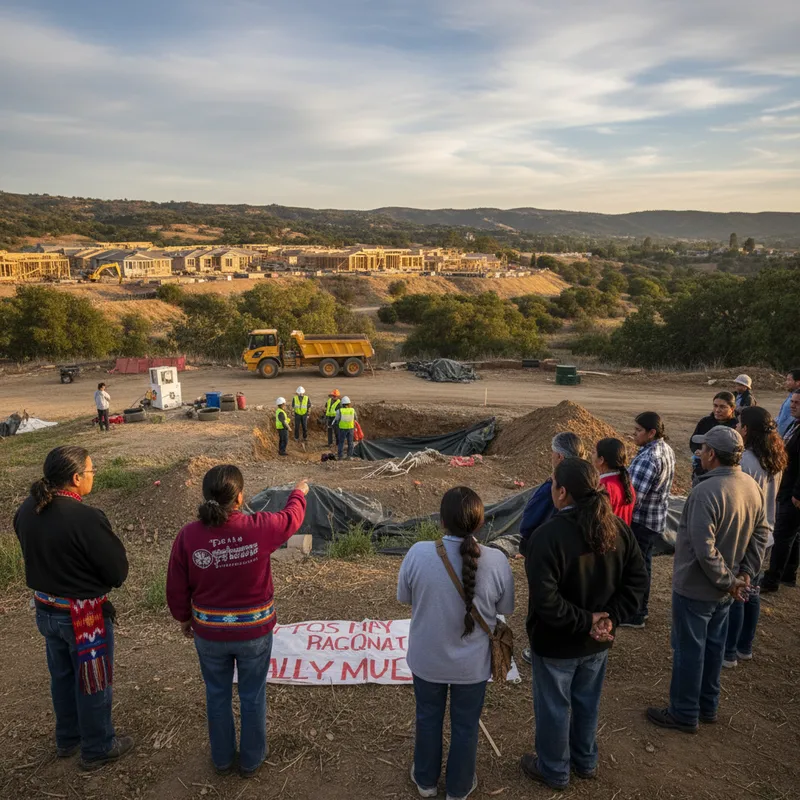
The San Pasqual Band of Mission Indians is calling for a temporary but complete halt to a large housing development in Poway after the discovery of human remains believed to be those of Indigenous ancestors.
Discoveries were first made in October of last year and again on two separate occasions last month at the Hidden Valley Ranch development site, where Shea Homes is constructing 40 houses on a 420-acre property. Evidence suggests the remains are of three individuals: an infant, an adolescent, and an adult. A jawbone with teeth was reportedly found under ancient grinding stones, indicating the presence of a burial site.
The land is of deep historical significance to the tribe. "This is the Ipai, Kumeyaay Land," said Johnny Bear Contreras, chairman of the San Pasqual Cultural Committee, who was called to the site after the initial discovery. "This is our land." Contreras described the atmosphere among tribal members who visited the site as solemn and significant. "We look, and we're all looking at each other and going, ‘Oh yeah, this is heavy. This has a lot.' So, you know, let's start to talk."
Development background and tribal concerns
The Hidden Valley Ranch project has been in the planning stages for more than two decades, first receiving approval from the City of Poway in 2003. Shea Homes acquired the site in 2025 and began construction last year. The area is known for its natural beauty, with rolling hills and trails popular with local enthusiasts for activities like hiking.
Despite the long development timeline, the recent discoveries have prompted the tribe to request a full stop-work order involving the developer, the city, and the U.S. Army Corps of Engineers. The goal is not to permanently end the project but to pause it, allowing time to investigate the findings and develop a respectful plan for handling any ancestral remains.
"Mistakes will happen, and that's our biggest concern," Contreras said, emphasizing the need for caution. While work has been paused in the immediate vicinity of the discoveries, construction has continued on other parts of the property, a situation Contreras called "disappointing." He added, "There's high potential you're going to find more people, you're going to find more graves.”
Our ultimate goal is to pay respect to the remains that have been found, and to put a respectful plan together for the remains that will be found. And this is what we’ve been trying to do since the first remain was found.
A question of consultation
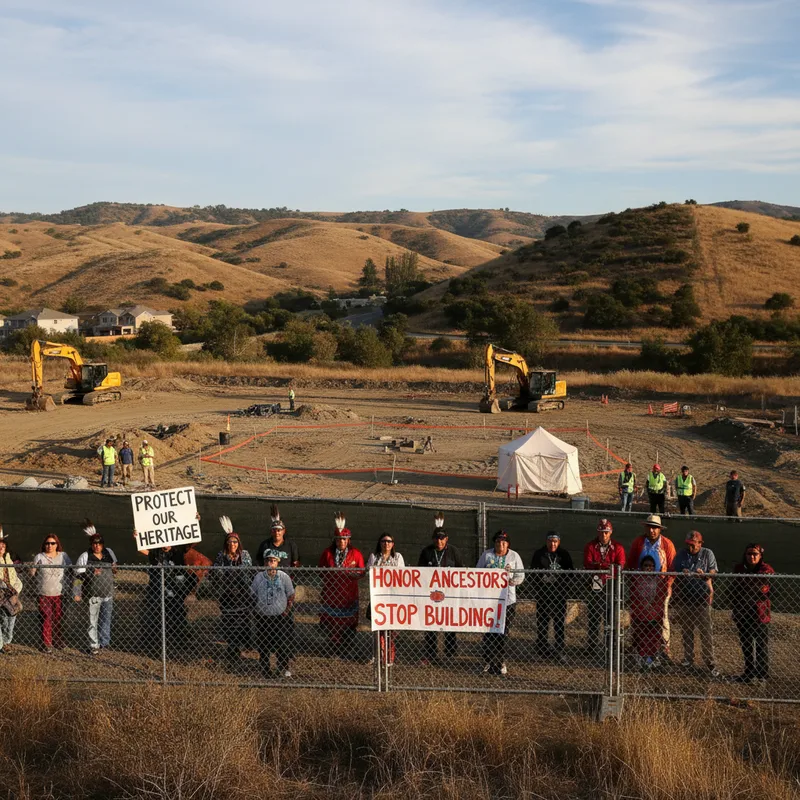
A key point of contention is whether the tribe was properly consulted during the project’s planning phases. While the initial approval came in 2003, a new state law was signed in 2004 requiring local governments to consult with Indigenous tribes to help protect their cultural places during land use planning. The project was approved again in 2014 with design modifications.
Michele Fahley, a lawyer representing the San Pasqual Band, said she can find no record of the required consultation and has asked the city for proof. Had a consultation occurred, Fahley told inewsource, tribal leaders would have immediately identified the site's cultural importance. “The tribes knew what this place was,” she said.
The requirement for government agencies to consult with Indigenous groups regarding cultural heritage is a standard practice in many jurisdictions to prevent the desecration of sacred sites, a topic of ongoing discussion in other Canadian and American cities. For instance, in a different context, a Calgary mayor is challenging the provincial premier over taxation policies that could affect municipal planning and services.
Responses from developer and city officials
Shea Homes has stated it is adhering to all legal requirements. “This development was approved by the city of Poway more than 20 years ago, and we have been working with the city and the Army Corps of Engineers in good faith since Shea acquired the site in 2025,” said Paul Barnes, division president of Shea Homes San Diego. “We will continue to comply with all legal obligations that relate to consistent site monitoring and the respectful collection and relocation of any authenticated artifacts that are discovered on site.”
Barnes added that the company looks forward to participating in discussions with the consulting tribes to create a respectful plan for any remains that are found.
The City of Poway confirmed the project’s 2003 approval followed a full environmental impact report which it says analyzed effects on tribal resources and included mitigation measures. According to a city statement, a tribal monitor has been on-site daily during grading, and the city has been coordinating with the California attorney general’s office and the U.S. Army Corps of Engineers. Officials noted their ability to share details is limited by confidentiality rules but confirmed they have issued stop-work orders and created buffer zones around the sensitive areas. However, the city maintains that broader enforcement authority rests with state and federal agencies.
Federal involvement and legal framework
The U.S. Army Corps of Engineers, which has regulatory jurisdiction over the project, has been meeting with the consulting tribes since the first discovery in October. Dena M. O’Dell, the public affairs chief for the Corps' Los Angeles District, said her agency has issued three currently active site-specific stop-work requests to Shea Homes but does not have the authority to suspend work on the entire 420-acre property.
The handling of such discoveries falls under a complex web of laws, including the federal Native American Graves Protection and Repatriation Act (NAGPRA). This act outlines procedures for federal agencies and institutions when they find Native American cultural items, including human remains, on federal or tribal lands. It provides a legal framework for the respectful treatment, repatriation, and disposition of these remains.
Contreras expressed that the process of collaboration between tribes and government agencies has worked many times before. "This has worked a thousand times before, and it and it needs to work here," he said, underscoring the tribe's desire for a proven, respectful process to be followed before construction proceeds further.