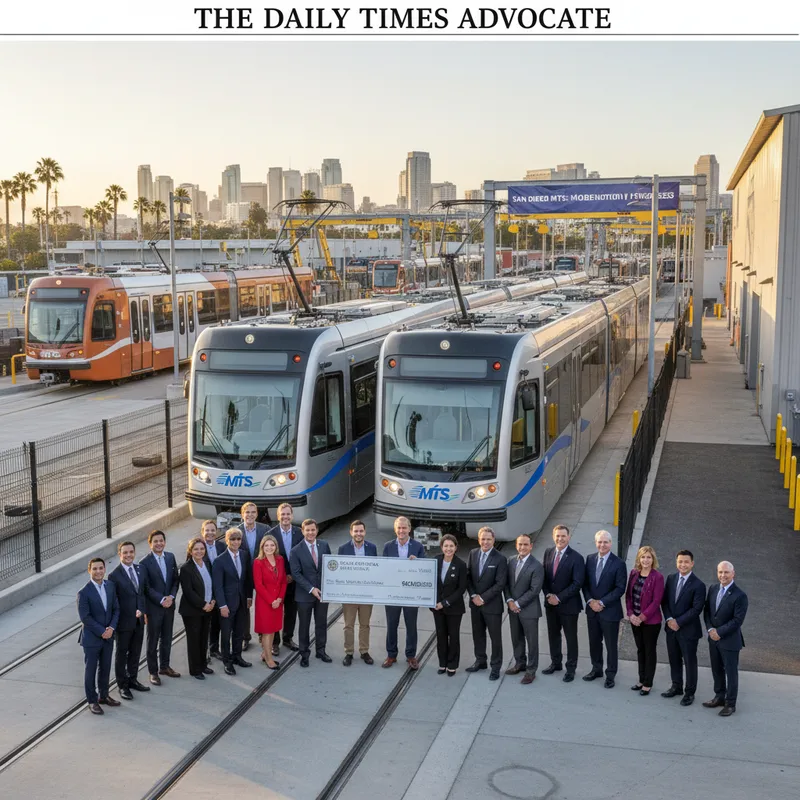
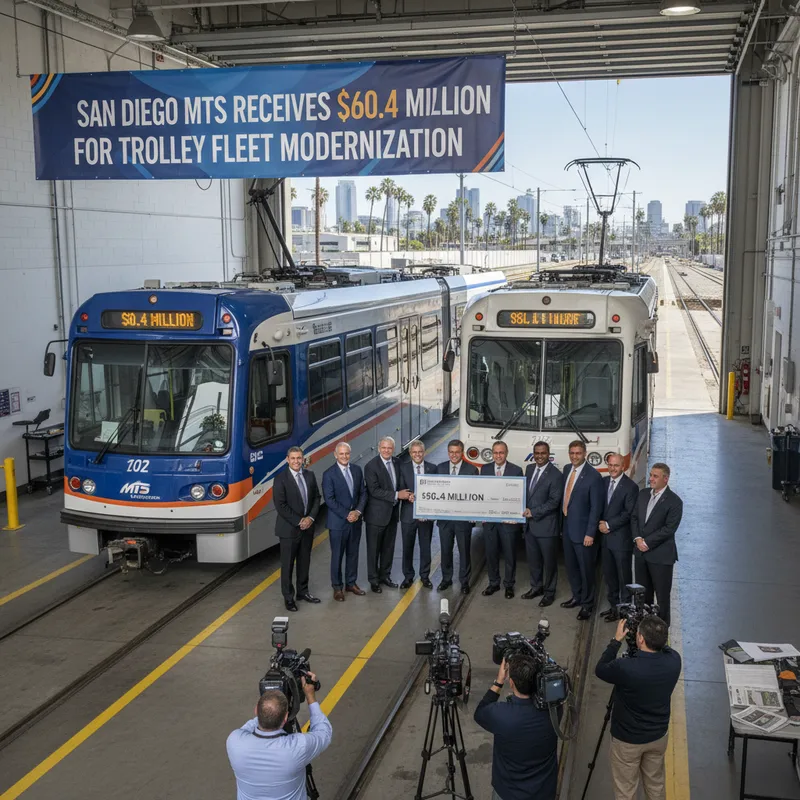
The San Diego Metropolitan Transit System (MTS) has been awarded a $60.4 million grant to modernize its trolley fleet, a move aimed at improving reliability, accessibility, and environmental sustainability across its network. The funding, allocated by the California State Transportation Agency (CalSTA) through its competitive State Rail Assistance Program, will kickstart a major overhaul of the aging rail system.
The grant directly supports the "MTS Rail Fleet and Facilities Modernization" project. The core of this initiative is the replacement of decades-old light rail vehicles (LRVs), many of which have been in service since the 1990s and are now approaching the end of their operational lifespan. These older models are becoming increasingly costly to maintain and lack the features of modern transit vehicles.
This significant investment will allow MTS to purchase new, energy-efficient trolleys that are compliant with the Americans with Disabilities Act (ADA). The funds are also designated for upgrading the agency’s maintenance facilities to ensure they can effectively service the next generation of LRVs. By updating its infrastructure, MTS aims to provide a safer and more dependable experience for the hundreds of thousands of passengers who rely on the trolley system daily.
A much-needed modernization project
The push to replace the older vehicles in the MTS fleet is a matter of necessity. Public transit vehicles, like all heavy machinery, have a finite useful life, typically around 25 to 30 years. The Siemens SD-100 light rail vehicles, which form the backbone of the older fleet, first entered service in San Diego in the early 1990s. After three decades of continuous operation, they face challenges such as metal fatigue, obsolete electronic systems, and a growing scarcity of replacement parts.
Operating a fleet of aging vehicles leads to a higher frequency of breakdowns, which can cause significant service delays and frustrate passengers. Maintenance costs also escalate over time as parts become harder to source and more labour is required to keep the vehicles running. This modernization project is a proactive step to prevent a decline in service quality and to ensure the long-term viability of the trolley network.
The transition to a new, standardized fleet will also streamline operations and maintenance procedures. Currently, MTS operates a mix of models from different eras, complicating repair work and inventory management. A more uniform fleet simplifies training for mechanics and operators and reduces the diversity of parts that need to be kept in stock, leading to greater operational efficiency.
Benefits for riders and the environment
The introduction of new LRVs promises tangible benefits for San Diego residents. For passengers, the most immediate improvements will be in comfort and accessibility. Modern trolleys are designed with low floors for level boarding, making it easier for people using wheelchairs, walkers, strollers, or carrying luggage to get on and off. They also feature enhanced audio and visual information systems, wider aisles, and improved climate control, creating a more pleasant and predictable journey.
Beyond passenger comfort, the new vehicles will deliver significant environmental advantages. The next-generation LRVs are considerably more energy-efficient, drawing less power from the grid and reducing the overall carbon footprint of the transit system. This aligns with San Diego's broader climate action goals, which encourage a shift away from single-occupancy vehicles and toward more sustainable modes of transportation like public transit.
Improved reliability is another key benefit. Newer vehicles are less prone to mechanical failure, meaning fewer delays and a more consistent service schedule. This is crucial for attracting "choice riders". commuters who have the option to drive but might be persuaded to take the trolley if it proves to be a fast, reliable, and convenient alternative. As the city continues to grow, an efficient transit system is essential for mitigating traffic congestion, an issue that affects communities across the county, as seen in recent widespread protests on various civic issues.
Part of a statewide transportation vision
The $60.4 million grant was secured through the State Rail Assistance Program, which is managed by CalSTA. This program is funded by state tax revenues and is part of a broader, multi-billion dollar effort to improve California’s passenger and freight rail systems. According to the official CalSTA website, the program aims to invest in capital projects that enhance safety, service reliability, and connectivity across the state.
MTS had to compete with other transit agencies across California for these funds, making the successful grant application a significant victory for the San Diego region. The award reflects the state’s confidence in MTS’s ability to execute the modernization project and its importance to the regional transportation network. The project was evaluated on its ability to improve the system’s state of good repair, enhance rider safety, and contribute to state climate objectives.
This state-level investment complements local and federal funding streams that are vital for maintaining and expanding public transit. As San Diego navigates complex urban planning challenges, such as debates over rules for historic homes and the need for denser, transit-oriented development, a modern public transportation system is seen as a critical piece of the puzzle. Investments like this are fundamental to building a more connected and sustainable region, with a transportation system that can support a growing population and a dynamic economy, much like how other Canadian cities like Brampton are fostering cultural and economic growth.
The future of San Diego transit
The MTS trolley system is a cornerstone of public transportation in San Diego County, connecting communities from the international border at San Ysidro to downtown, Old Town, and major employment and educational centres. However, like many public systems, it faces ongoing challenges, including ensuring passenger safety, which has led to increased law enforcement focus in certain areas, such as the efforts to address teen meetups at La Jolla beaches near transit routes.
With the procurement process for the new vehicles and the planning for facility upgrades now set to move forward, MTS officials have not yet announced a specific timeline for when the first new trolleys will enter service. Typically, the manufacturing and delivery of new light rail vehicles can take several years from the initial order.
This $60.4 million injection of state funds represents a crucial step in future-proofing one of Southern California’s most important transit arteries. As the new, modern vehicles are integrated into the system over the coming years, San Diegans can expect a trolley network that is not only more reliable and comfortable but also better equipped to serve the needs of the region for decades to come.